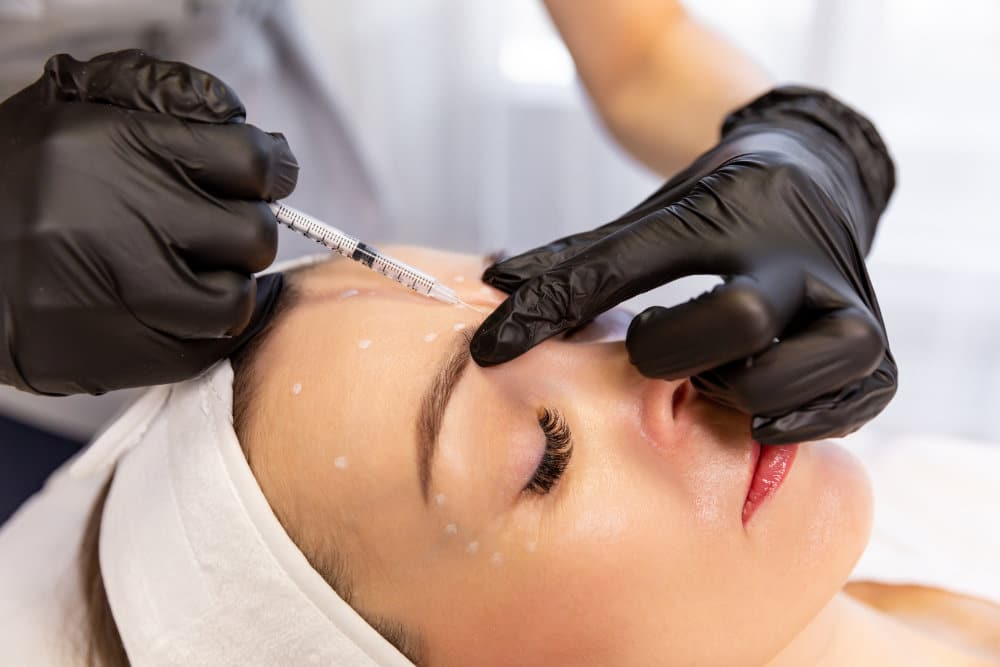
Staying active is one of the best things you can do for how you age, and we’re firm believers in it. Even so, the skin often follows its own timeline. Collagen thins with each passing year, and the cheeks and jawline may start to soften even when the rest of you is thriving.
At Aledo Empowered Wellness, we treat those changes the same way we treat everything else: by working with your body, not against it. A PDO thread lift does exactly that, lifting and firming skin while prompting your own collagen to rebuild from underneath.
What Is a PDO Thread Lift?
A PDO thread lift is a nonsurgical procedure that uses dissolvable polydioxanone (PDO) sutures to lift loose skin and stimulate new collagen growth. A trained provider inserts the threads beneath the skin with a thin cannula, then gently repositions the tissue upward. The threads dissolve over several months, but the collagen they produce keeps working long after.
The material used in PDO threads, polydioxanone, is not new or experimental. Surgeons have used PDO sutures for decades in procedures like cardiac surgery, where they’re trusted to dissolve safely inside the body. Aesthetic medicine adapted that same suture into a tool for facial rejuvenation. When Marisa MacKenzie, PA-C, places threads, she’s using a material with a long, well-documented safety record, applied with the anatomical precision she developed across 15 years of experience in family practice, orthopedics, hormone management and aesthetics.
Benefits of PDO Threads
PDO threads can improve mild to moderate skin laxity while supporting gradual collagen production. Benefits may include:
- Subtle lifting without surgery: Barbed PDO threads can help reposition sagging tissue in areas like the cheeks, jawline and neck.
- Improved skin firmness: As the threads dissolve, they stimulate collagen production to support firmer, smoother skin.
- More defined facial contours: PDO threads can help sharpen areas that have softened over time, including the jawline and lower face.
- Natural-looking rejuvenation: Results are designed to look refreshed rather than overly tight or dramatically altered.
- Minimal downtime: Most patients can return to normal daily activities shortly after treatment, though swelling, bruising or tenderness may occur.
- Gradual improvement over time: Some lift may be visible right away, with collagen-related benefits continuing to develop in the months after treatment.
How Do PDO Threads Work?
PDO threads work in two different ways: some provide a mechanical lift, while others support collagen production over time. Barbed threads have tiny projections along their length, which grip the underside of the skin. When Marisa repositions these threads and pulls them taut, they provide an immediate lifting effect. Smooth threads don’t reposition the skin but help with firmness and collagen.Are There Different Types of PDO Threads?
Yes, there are different types of PDO threads available, each designed to address different concerns. These can be mixed and matched, depending on your goals:- Smooth (mono) threads: Used for superficial lines and wrinkles, smooth threads lack the barbs or cogs that grip the underlying tissues. Instead of lifting, they act as a “skin booster,” promoting new collagen and elastin production for several months.
- Barbed (cog) threads: Equipped with tiny barbs, hooks or cones, these threads embed into the skin. When pulled, they visibly lift and reposition sagging tissues, making them ideal for drooping cheeks, jowls and deeper wrinkles.
- Screw threads: Featuring a coiled design twisted around an insertion device (either a cannula or a needle), screw threads maximize surface area and stimulate a stronger collagen response. They are ideal for volume deficits and deep wrinkles or folds.
| Thread Type | Primary Purpose | Best For |
|---|---|---|
|
Thread Type |
Primary Purpose |
Best For |
|
Smooth threads |
Stimulate collagen production without lifting |
Superficial lines and wrinkles, overall skin quality |
|
Barbed threads |
Grip and reposition sagging tissue |
Drooping cheeks, jowls, visible skin laxity |
|
Screw threads |
Stronger collagen-stimulating effect |
Volume loss, facial folds, deeper wrinkles |
What Can a Thread Lift Address?
Because they come in different types, PDO threads are highly versatile. Smooth threads and screw threads focus on collagen stimulation and skin quality, while barbed threads do the heavier lifting. Marisa chooses the combination based on what your face actually needs. At Aledo Empowered Wellness, we use PDO threads to:- Lift and define a softening jawline
- Reduce the appearance of jowls
- Rejuvenate the cheeks and midface
- Subtly raise a heavy or lowered brow
- Firm loose skin along the neck
- Refine the area beneath the chin
- Smooth nasolabial folds and other facial wrinkles
Who Is a Good Candidate for PDO Threads?
The best candidates for a PDO thread lift have mild to moderate skin laxity and want a noticeable lift without the cost or downtime of surgery. Most thread lift patients are in their late 30s to early 50s, though candidacy depends on skin quality and concerns more than age. While a versatile and effective treatment option, PDO threads are not the right tool for everyone. Those with advanced skin laxity may not achieve their desired results, as the threads aren’t strong enough to hold up heavy, sagging tissue. You may also need to postpone if you’re pregnant, breastfeeding, or managing an active skin infection. During your consultation, our team will review your concerns, goals and medical history to determine if a thread lift is right for you. We’ll also explain each step of the procedure in detail and go over the results you can expect to ensure you have realistic expectations.What Happens During Treatment?
Most thread lifting appointments take 60 to 90 minutes. The procedure begins with the administration of local anesthesia to numb the treatment area. Once it takes effect, Marisa will use a blunt-tipped cannula to insert the threads through carefully chosen entry points, typically in the hairline, just in front of the ear or behind the ear, depending on your goals. She will maneuver the threads to achieve your desired lift and trim any excess, leaving no visible sign of treatment. The threads are left beneath the skin to provide support and stimulate collagen production over the next several months.Is There Downtime After a PDO Thread Lift?
Most people get back to their normal within a day or two, although some visible bruising and swelling are possible in the first week. You might also feel mild tightness or a pulling sensation when you move your face, which is normal and fades as the threads settle. Tenderness at the insertion points is common and usually resolves shortly after treatment. Marisa will give you specific aftercare instructions to protect your results while everything settles. These typically involve skipping strenuous exercise for about one week, avoiding facials and saunas, and consciously limiting excessive facial movement for the first few days. Results appear immediately from the lift itself, then continue improving over the following eight to 12 weeks as new collagen forms. Depending on factors like your concerns, skin quality and the type of threads used, results can be expected to last for 12 to 18 months, though some collagen-related improvement may last longer.The Aledo Empowered Wellness Difference
Plenty of med spas offer thread lifts, but not many are backed by the expertise of a board-certified emergency medicine physician and a physician assistant with a passion for holistic aesthetics and preventive care. At Aledo Empowered Wellness, Marisa MacKenzie, PA-C and Travis MacKenzie, MD, bring their broad clinical perspective to every aesthetic treatment. We consider the whole picture before recommending any procedure, including the hormonal and nutritional factors that affect how your skin heals and how long your results last. If hormonal changes or nutritional gaps are quietly working against your skin, we can address those alongside your aesthetic treatment through our PRP/PRF, hormone optimization and exosome services. Few thread-lift providers can connect those dots under one roof. Meet Our TeamSchedule Your PDO Thread Lift Consultation in Aledo, TX
Your face deserves the same prevention-first approach we’d give your joints or hormones. A PDO thread lift gives you a real, visible lift today and stronger, better-supported skin over the months that follow, all without surgery or extensive downtime. If you’re ready to see what a thread lift can do for you, schedule your consultation at Aledo Empowered Wellness today. Call us at 817-646-8935 or book online to get started.Frequently Asked questions
PDO thread lift pricing depends on your starting skin quality and which areas you’re treating. A jawline touch-up and a full midface lift will have very different price points. Rather than quote a number that won’t match your plan, we give you an exact figure at your consultation after Marisa MacKenzie, PA-C, evaluates your concerns and goals.
Before any threads are inserted, your provider will administer a local anesthetic to numb the treatment area. You will feel some pressure, tugging and pulling during the procedure, but not pain. Soreness afterward is common, but most patients are surprised by how manageable it is.
You may feel some tightness, tenderness or firmness beneath the skin in the first few days after your thread lift, especially when making facial expressions or touching the area. This is temporary and usually improves as swelling settles and the threads begin to integrate with the surrounding tissue. Once healed, the threads should not be noticeably felt under the skin.
PDO threads are made with polydioxanone (PDO), an absorbable, biodegradable polymer used in dissolvable sutures. PDO is a biocompatible and hypoallergenic material that breaks down safely into water and carbon dioxide, which is naturally expelled by the body.
Yes, PDO is an FDA-cleared material that has a long history as a surgical suture, commonly used for internal tissue closures. PDO sutures (PDS) are often favored for delicate cardiothoracic procedures, such as congenital heart repairs in children, due to their strength, flexibility and predictable dissolution time. When used for thread lifting, PDO threads have a similar safety profile and typically dissolve after six to nine months.
PDO thread results typically last 12 to 18 months, but some patients notice improvement that lasts for up to three years. The threads themselves dissolve within about six months, but the collagen your body produces in response continues supporting the skin well after the threads are gone. Maintenance sessions can extend your results.
PDO threads are considered minimally invasive, but like any aesthetic treatment, they do carry some risks. Possible side effects may include:
- Swelling
- Bruising
- Numbness
- Pain or tenderness
- Temporary skin dimpling
- Asymmetry
- Infection
- Visible or palpable threads
These risks can be reduced by choosing an experienced provider who understands where to place the threads and by closely following all aftercare instructions.